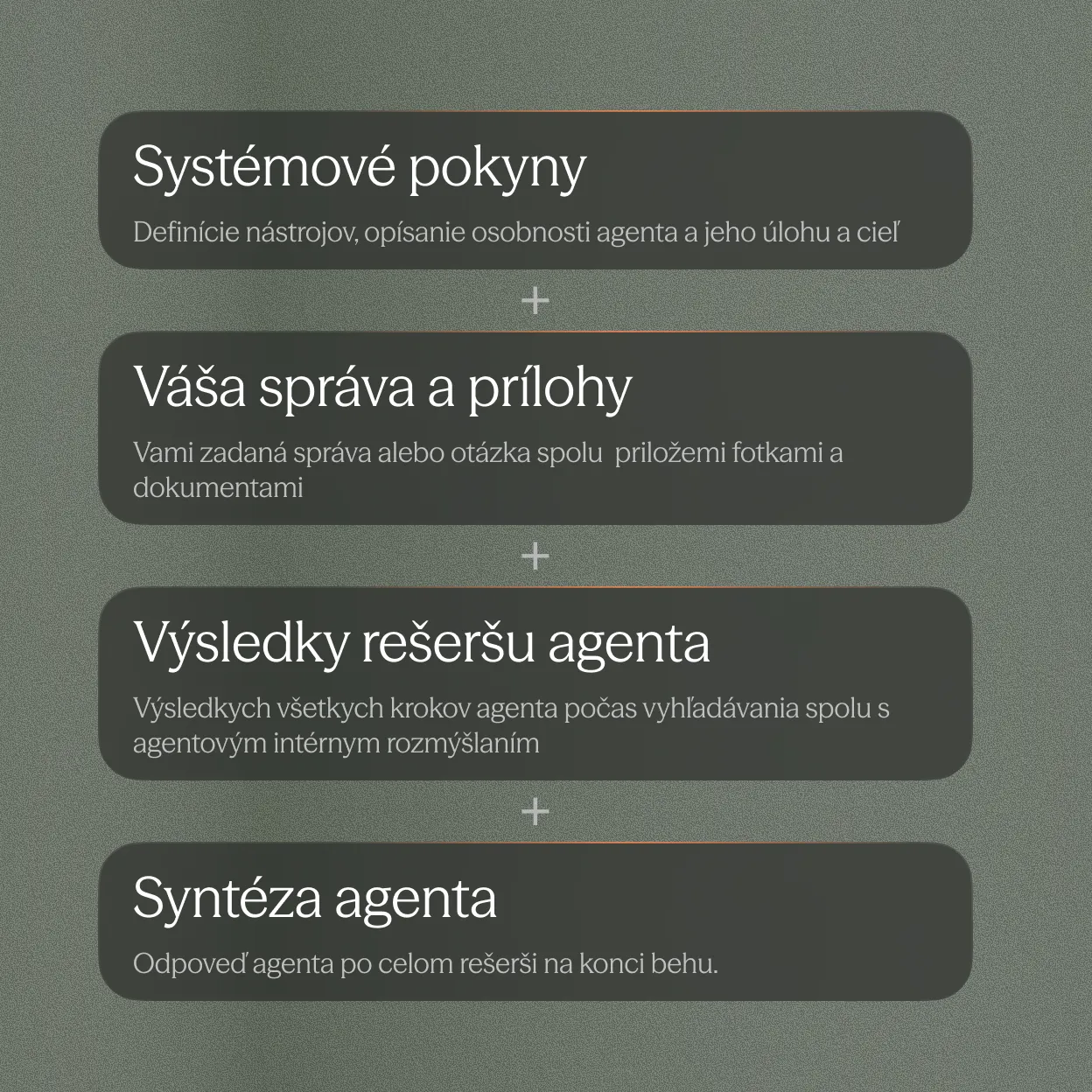
A legal database gives you the document. You have to find the answer yourself.
Access to court decisions in Slovakia is scattered and incomplete. Private databases are expensive and inaccessible to ordinary citizens. Our platform provides free, comprehensive access to case law with advanced search functionality – because law belongs to everyone.


Praktik
Tím Praktik.ai“Here you have a 40-page decision. We wish you pleasant six hours of studying it.”
This is how most legal databases communicate in practice today – albeit indirectly.
Every lawyer knows this moment. They find the document, but the real work only begins after. Not so long ago, the main problem was simple: getting access to legal sources. Legal databases largely solved this problem. Laws, case law, and commentaries are now available in one place, and searching them is significantly easier than in the past.
However, this does not automatically mean that the lawyer will get the answer faster.
Where the Most Time is Spent
The most demanding part of the work begins after the document has been found. The decision must be read, its legal principle understood, the relevant passage identified, and it linked to other provisions of the law or case law. This analytical phase consumes the most time.
From the perspective of a law firm, it is also time that cannot always be efficiently billed.
How Much Legal Research Costs
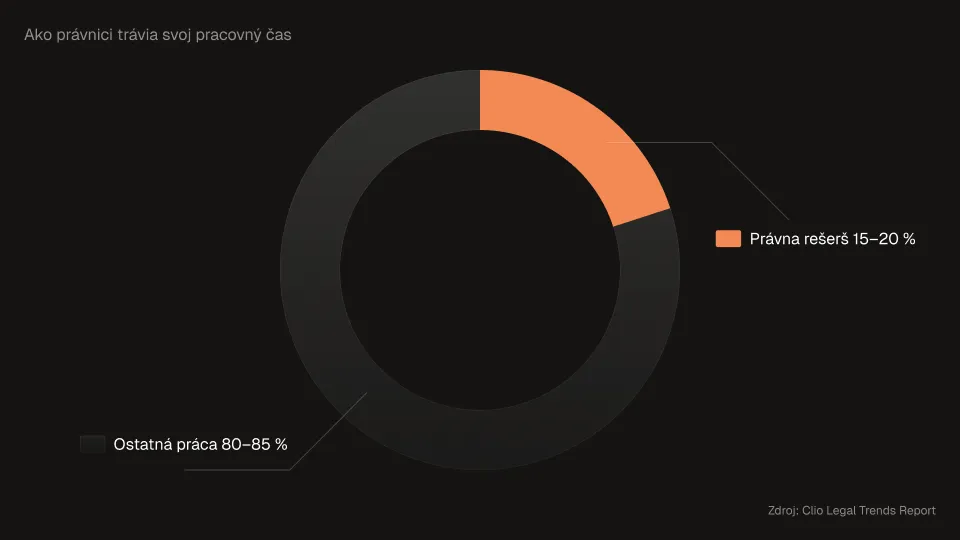
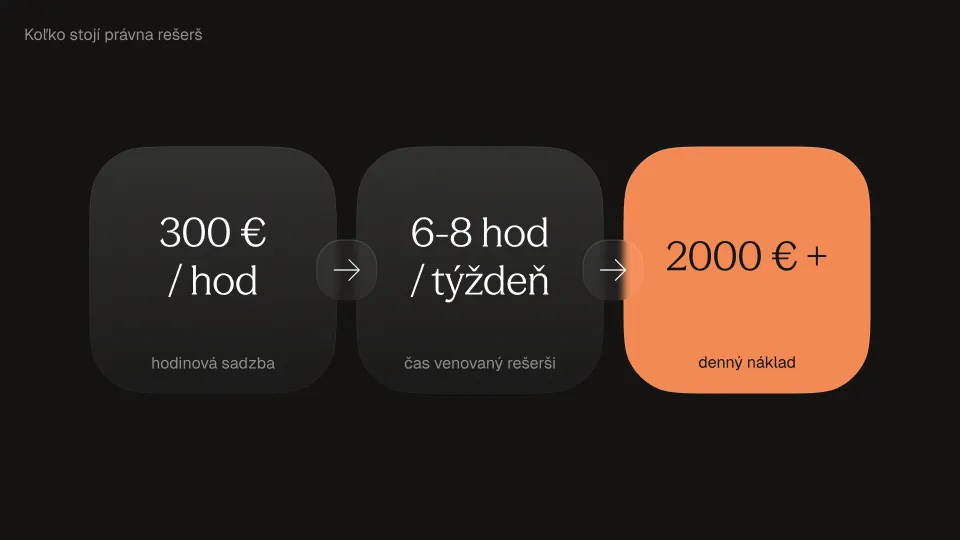
The scope of this problem is well illustrated by available data. According to the Clio Legal Trends Report, the average hourly rate for lawyers is around €300 per hour, and it can be even higher in some specializations or larger firms. At the same time, approximately 15 to 20 % of working time is spent on legal research—that is, searching for and processing legal information.
For a standard 40-hour work week, this means approximately six to eight hours per week. In terms of labor costs, the result is quite clear: one working day dedicated to research can cost more than €2,000.
A significant portion of legal work costs thus arises even before the actual legal assessment of the matter—in the process of searching for and processing information.
The Database Gives the Source. The Answer is Up to You.
A legal database gives you the document, but you still have to extract the answer from it yourself. This means reading the decision, selecting the relevant part, and placing it into the context of a specific legal question.
The entire process between the moment “I found the decision” and the moment “I understand the answer” remains with the lawyer. And this process is the most demanding in terms of both time and cost.
How Legal Research is Changing
This is where the way of working begins to change. A question that previously took an hour of research may now have an answer in minutes—complete with a citation of a specific provision or decision.
According to the Future of Professionals report from Thomson Reuters, using AI can save lawyers approximately 240 hours per year on tasks such as legal research or case law analysis. In practice, this represents about six working weeks per year that would otherwise be spent on manual information processing.
The Difference Today Does Not Lie in the Sources
Access to documents is standard today. The difference lies in how quickly you can get to the answer from the document.
Praktik searches the legislation and case law, finds the relevant answers, and points out the specific source every time. It prepares the materials, while the assessment remains with the lawyer.
Key Takeaways
- Lawyers spend approximately 15 – 20 % of their working time on legal research
- One day of research can cost more than €2,000 at an average rate
- The biggest time difference occurs between finding the source and understanding the answer
New tools are starting to shorten this part of the work today.
Sources
Clio. Legal Trends Report. https://www.clio.com/resources/legal-trends/
Thomson Reuters. Future of Professionals Report. https://www.thomsonreuters.com/en/c/future-of-professionals/